Phosphorous Cycle:
Nitrogen Cycle:
Carbon Cycle:
Hydrologic Cycle:
Welcome! Thank you for visiting my blog. I hope you find the information I have available interesting and informative. Have a great day!
Monday, January 3, 2011
Limiting Factors
Density-dependent limiting factor: A limiting factor whose effects depend on the size of the population depend on population density. The less dense the population, the less severe the effect of the limiting factor.
Examples: Predation and disease
Density-independent limiting factor: A limiting factor that has the same effect on a population regardless of its population density.
Examples: Natural disasters and climate
Examples: Predation and disease
Density-independent limiting factor: A limiting factor that has the same effect on a population regardless of its population density.
Examples: Natural disasters and climate
Coevolution Mechanisms
Secondary Compounds: Purple Loosestrife produce alkaloids, which are secondary compounds.
Camouflage: Yellow Crab Spider
Mimicry: Lejops lineatus
Pictures of this animal are on the following website:
http://bugguide.net/node/view/195678/bgpage
Camouflage: Yellow Crab Spider
Mimicry: Lejops lineatus
Pictures of this animal are on the following website:
http://bugguide.net/node/view/195678/bgpage
Sunday, January 2, 2011
Example of an Introduced Species and Its Effects
Gambusia affinis, or the mosquitofish, is a species of freshwater fish from the watershed of the Gulf of Mexico. It is an introduced species in Australia because it was transported there by humans to control mosquito larvae populations. It now preys upon other invertebrates besides mosquito larvae and rapidly depletes resources in the area.
Three Predator-Prey Relationships
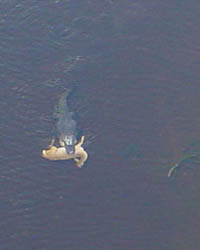
1. American Alligator (Alligator mississippiensis) - Whitetail Deer (Odocoileus virginianus)
2. Great Blue Heron (Ardea herodias) - White Perch (Morone americana)
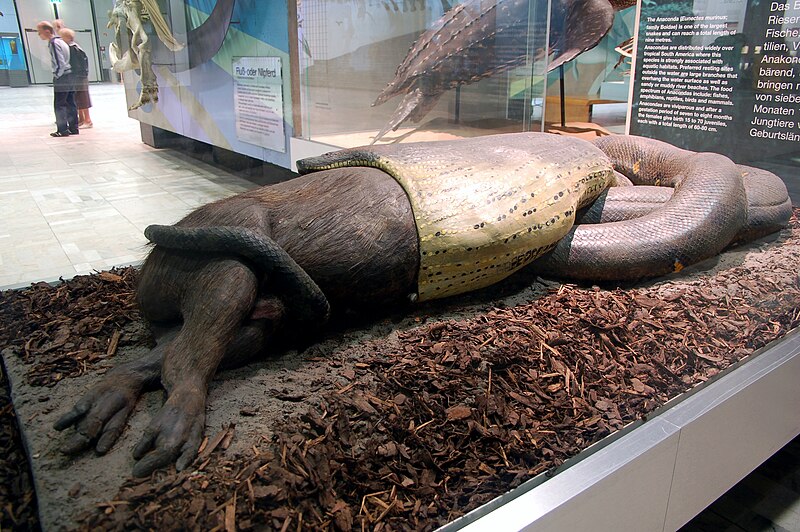
3. Green Anaconda (Eunectes murinus) - Capybara (Hydrochoerus hydrochaeris)
(Although this is just a display, there have been reports of such eating habits)
2. Great Blue Heron (Ardea herodias) - White Perch (Morone americana)
3. Green Anaconda (Eunectes murinus) - Capybara (Hydrochoerus hydrochaeris)
(Although this is just a display, there have been reports of such eating habits)
Endangered Species in Wetlands
The Florida panther (Puma concolor coryi) is an example of an endangered species in wetlands. The cause of their species decline used to be hunting, but it is now habitat loss. They are not well adapted to human intrusions and their population decrease displays the effect of habitat removal by humans.
Competition in Wetlands
Purple loosestrife (Lythrum salicaria) competes with cattails for a habitat in many American wetlands.
Subscribe to:
Posts (Atom)